
By Natalie Gilson and Melissa Weber, Co-CEOs, Pisces Oceans Inc. WBE Canada Certified 2025
I was walking beside the harbour with a good colleague and friend. It was dark, and the lights of the city reflected in the ocean like stars, the boats knocking together gently in the waves like bamboo chimes.
Sort of suddenly, he turned and asked, “What’s up with you and Melissa calling yourselves co-CEOs anyway? That doesn’t make sense to me.”
My hackles went up. I felt defensive. I tried to explain our reasoning in a way that would feel rational, structured, and acceptable.
Later, I realized something important.
His discomfort with our structure, and my instinct to justify it, weren’t personal. They were both reactions to a long-ingrained system we’ve all inherited. A system that says leadership must look one way: hierarchical, singular, top-down. One person at the helm and one final decision-maker.
That system made sense once, but it doesn’t anymore.
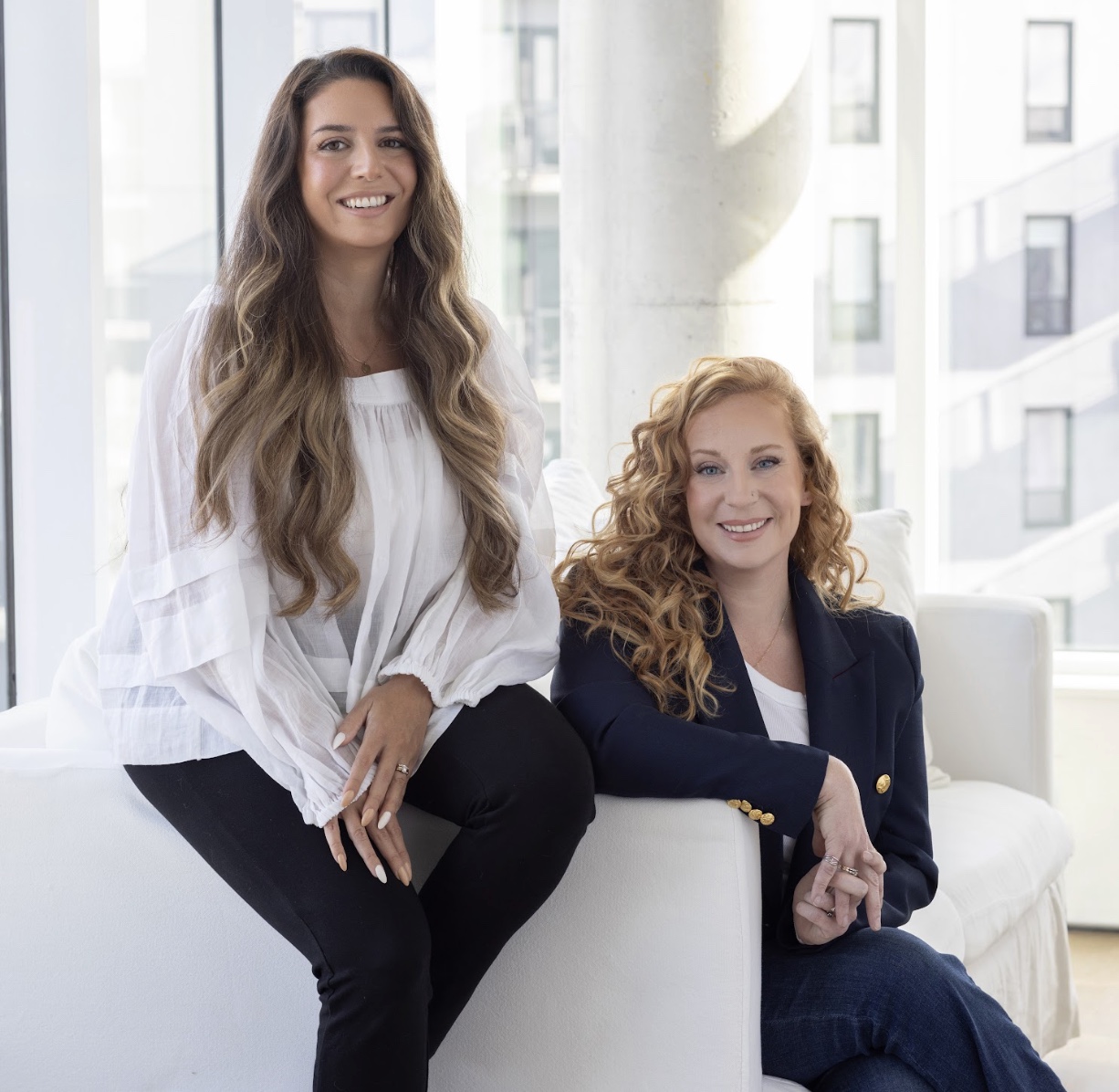
My name is Natalie Gilson, and together with Melissa Weber, I co-lead Pisces Oceans Inc., a consultancy supporting ocean-focused projects around the globe with strategy, management, and communications. When we took over the leadership of Pisces Oceans Inc. in 2025, we did so together. Completely equal partners in a business world built for single leadership and sole decision-making power. We’ve only been on this journey for a year, but we have already seen the immense benefits that this co-leadership style can have, not just on the business, but in our work and in the broader world as well.
What lessons have we learned?
What follows is what we’ve learned. And our hope is that some of it lands for you too.
Many of our corporate leadership structures were shaped in the mid-twentieth century, optimized for predictability, clear chains of command, and industrial efficiency. That worked when markets were stable and challenges were more linear.
Today’s realities are different. Climate uncertainty. Interconnected global systems. Rapid technological shifts. Social expectations evolving faster than institutions can track.
You cannot navigate modern complexity with a model built for the 1950s. And yet, most of us business owners inherited that model as the default. We were handed a template and told to fit ourselves into it.
Women, in particular, were handed two contradictory messages. Either lead like the men who built the system, adopt the singular authority, the hierarchy, the separation of purpose from profit. Or don’t lead at all.
At Pisces Oceans, we have chosen a third option: the option to build something better. Something that fits for today. A shared leadership model.
Many women are still running households. Still tracking when the dog needs to visit the vet. Still holding the mental load of family logistics while simultaneously holding the strategic load of a business. But we don’t say this as a complaint. We say it in solidarity and in context.
Decision fatigue is real. And for women leading businesses, it can be relentless.
When we designed our co-CEO structure at Pisces, one of the things we were quietly solving for was this specific kind of fatigue. With two of us at the helm, decisions are genuinely shared and that fatigue is reduced. When one of us is burnt out or stretched thin, the other steps forward. There are no gaps in leadership, not operationally, emotionally, or strategically. The company doesn’t struggle because one of its leaders has to step away to deal with a personal matter. It just carries on under the leadership of the other.
What seems at first like the spreading of authority and a weakness in structure is actually strategic architecture. It’s strength and resilience. And it reflects something we have come to realize about the power of the natural female instinct: that to lead with an awareness of the whole, a willingness to share the load, and a commitment to keeping things moving even when it’s hard, is an incredible kind of strength that women can bring. The kind of strength that the complexities of today need.
In most traditional corporate structures, there’s a visionary at the top and an implementor just below. The visionary has the ideas. The implementor makes them real. The hierarchy is vertical, and the visionary typically holds final authority.
We’ve seen the failure modes on both ends. Visionary-led businesses where brilliant ideas never come to fruition because no one is grounding them in reality. Implementor-led businesses where every ambitious idea gets quietly shelved because “it’s not the right time,” and it never is.
We bring both orientations to the top of our company, side by side.
One of us tends toward the big picture: where we’re going, what it means, how it connects. The other tends toward systems, structure, and execution: how we get there, what it actually takes, what could go wrong. Instead of stacking those strengths vertically, one above the other, we placed them side by side. Every major decision gets tested from both angles immediately. Big ideas get strengthened by practical insight and operational caution gets energized by vision.
Does it slow us down to have to balance two opposing views? On the contrary, it makes us more resilient and quicker to act. Why? Because we know that if one of us feels strongly about something, it’s a signal to the other. We know that sometimes we have to take the lead, and sometimes we have to follow. One perspective does not suit all situations, and we each have natural strengths that govern specific moments.
And yes, people still ask us: but who makes the final call?
We do, together, trusting each other and our natural instincts as two leaders working in partnership.
We know our why: protecting the ocean. Every decision we make is filtered through what is best for the ocean and the people we support who are serving it, alongside what is sustainable for our company. That dual commitment, to purpose and to profit, is what defines us.
We are, by almost every measure, the odd company out in our industry. We work in a field historically defined by technology, science, and fishing, and dominated by men. We lead as women who refused to adopt the traditional single-leader model that we were handed. We are also a social enterprise in professional services, a sector where only a small fraction of firms hold that designation.
We didn’t stumble into any of this. We chose it, because we chose to do what is best for the ocean. That shared purpose of protecting the greatest ecosystem on the planet aligns us when things get tough. When decisions are hard or weeks bring us down, we come back to purpose.
And profit, well, that guides us of course. But for us, the goal is that more profit means more impact, which brings us back, always, to the ocean.
And we are not alone in this. Women are naturally building businesses that balance financial returns with meaningful impact, and the evidence of that is all around us. In a world dominated by extractive, profit-first thinking, that instinct is not a soft skill. That is a leadership edge.”
Our last lesson from this first year as co-CEOs is this: no one gets anywhere alone. Even if you are leading alone, don’t be alone.
Our success stands on our own shoulders, yes, but also on the shoulders of the people who have supported us, coached us, and partnered with us along the way. We are not above advice. We don’t lead from a place of ego. We lead from a place of continuous learning.
We try things. Some of them work. Some of them don’t. We adapt. We iterate. We stay curious about what we don’t yet know.
There’s a version of leadership that’s about being seen as the most impressive person in the room. That feels like it belongs to an older model, where the goal is to get yourself as far as you can, where success means being the best, the most profitable, the top dog. But that has never been our version. Our version is about being the most useful, to the ocean, to our clients, to each other. Which feels, to us, like the women-led version.
We also don’t spend our energy comparing our journey to others’. But we’ve learned to use those moments of comparison as fuel rather than weight, asking not why them and not us, but what can we learn from how they got there?
Probably the most valuable lesson of this year is the simplest one: we are never done growing, and there is always something new to learn.
The status quo isn’t failing because women aren’t participating in it. It’s failing because it was built for a different era, one defined by stability, linear challenges, and the assumption that progress meant more of the same.
Women-led businesses are not just entering that space. We are redesigning it.
Many of us are building from scratch, outside traditional power structures, or reshaping them from within. That gives us a unique freedom to design leadership around our why, our strengths, and the actual complexity of the problems we’re solving.
We are building businesses that are collaborative rather than competitive. That see community as a priority and sustainability as a necessity rather than a trend. That lead with connection instead of domination, and with care for the future rather than just the next quarter.
These are not soft values or fluffy feminine views. They are the skills the world most urgently needs right now.
Women can do more than the world has traditionally expected of us in business. We can, and do, change the world through whatever our passion is. The ocean. The climate. The community. The industry no one thought we belonged in.
Leadership doesn’t need to be performative. It doesn’t need to mirror what has always been done. It needs to work. For us, that meant building a structure that reduces burnout, distributes responsibility, and strengthens decision-making.
For someone else, it may look completely different.
That’s exactly the point.
What comes next won’t be defined by how well we fit into old systems. It will be defined by how boldly we design new ones.
About Pisces
Pisces Oceans Inc. is a Nova Scotia-based ocean project consultancy dedicated to eliminating the barriers that hold projects back. They work alongside researchers, governments, innovators, and non-profits to help their ocean initiatives succeed. Pisces participated in Cohort 6 of the Atlantic Canada Mentorship Program with Centre for Women in Business and WBE Canada and certified as a WBE Canada Woman Business Enterprise (WBE) in 2025
About Natalie Gilson
As Co-CEO of Pisces, Natalie is dedicated to meeting ocean projects where they’re at, whether they’re in the midst of innovation or implementation. Her approach brings together techniques from branding, marketing, communication, design thinking, and strategic planning. Natalie combines these skills with a deep passion for the ocean and understanding of the ocean industry to offer something truly unique: communications services tailor-made to support impactful ocean projects.
About Dr. Melissa Weber
As co-CEO of Pisces, Melissa is dedicated to supporting ocean projects through ever stage, from conception to close. Melissa’s approach brings together her extensive knowledge of research, comprehensive understanding of grants and compliance, intuitive awareness of finances and budgets, and a background in oceans to ensure that each project is handled with the care and customization it needs to be both successful and impactful.